
Learning science doesn’t always have to be confined to textbooks and dry lectures. Enter the world of model-building, a powerful tool that transforms abstract concepts into tangible experiences. By crafting their own models, students actively engage with scientific ideas, fostering deeper understanding and igniting their creativity.
Let’s take a peek at three ways model-building can bring science to life:
1. Mapping Mountains and Valleys:
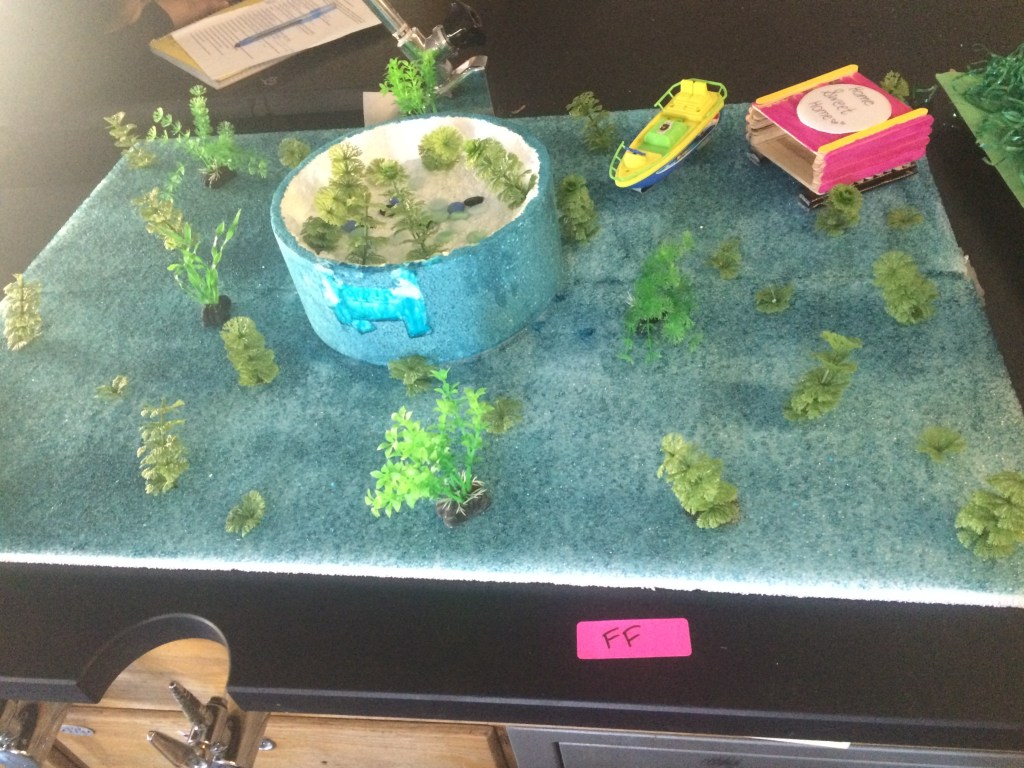
Imagine students transforming into miniature cartographers, building their own topographic maps. Using materials like clay, sand, and cardboard, they sculpt miniature landscapes, meticulously shaping peaks, valleys, and rivers. Their creations can depict real-world locations or fantastical terrains of their own invention.
Learning takes a hike: While building, students grasp concepts like elevation, contour lines, and erosion in a concrete way. They experiment with scales, calculate slopes, and even learn about map symbols as they add details like forests and roads. This project seamlessly blends geography, math, and art, offering a multi-sensory exploration of the Earth’s diverse topography.
2. Cell Symphony in Clay:
Next, let’s shrink down to the microscopic world where students become architects of life by constructing models of plant cells. Using readily available materials like modeling clay, pipe cleaners, and jelly beans, they bring the intricate structure of a plant cell to life. Each component, from the nucleus to the cell wall, takes shape under their careful hands.
Learning blossoms: This hands-on experience demystifies the complex inner workings of a plant cell. Students visualize the arrangement of organelles, understand the roles they play, and even explore concepts like photosynthesis by replicating the chloroplasts. This project fosters a deeper appreciation for the microscopic wonders that sustain life on Earth.
3. Unveiling the Atomic Dance:
Finally, let’s blast off to the subatomic realm where students explore the world of atoms by building their own models. Using foam balls, beads, and wires, they create miniature representations of atoms, complete with protons, neutrons, and electrons in their respective orbits.
Learning takes flight: By building models, students visualize the structure of atoms, differentiate between subatomic particles, and understand concepts like atomic number and electron configurations. This project ignites curiosity about the building blocks of matter and opens doors to further exploration of the fascinating world of chemistry and physics.
The benefits of model-building are vast:
- Enhanced understanding: Models transform abstract concepts into tangible experiences, solidifying comprehension.
- Creative exploration: Students express their understanding through their own designs, fostering critical thinking and problem-solving skills.
- Collaboration and communication: Working in teams to build models encourages teamwork and communication as students explain their ideas and refine their designs.
- Motivation and engagement: The hands-on nature of model-building is inherently engaging, boosting student motivation and making learning fun.
So, teachers, ditch the rote memorization and unleash the model-building potential in your classroom! Watch your students transform into scientific sculptors, bringing complex concepts to life with their own creative hands. As they sculpt mountains, cells, and atoms, they’ll witness the magic of learning science through the power of creation.
Ready to get started? Here are some resources to jumpstart your model-building journey:
- National Association of Biology Teachers (NABT): https://nabt.org/
- American Chemical Society (ACS): https://www.acs.org/
- Science Buddies: https://www.sciencebuddies.org/
Let’s build a love for science, brick by brick, molecule by molecule, and atom by atom. Happy model-building!

 One Teachers Corner
Leave a comment